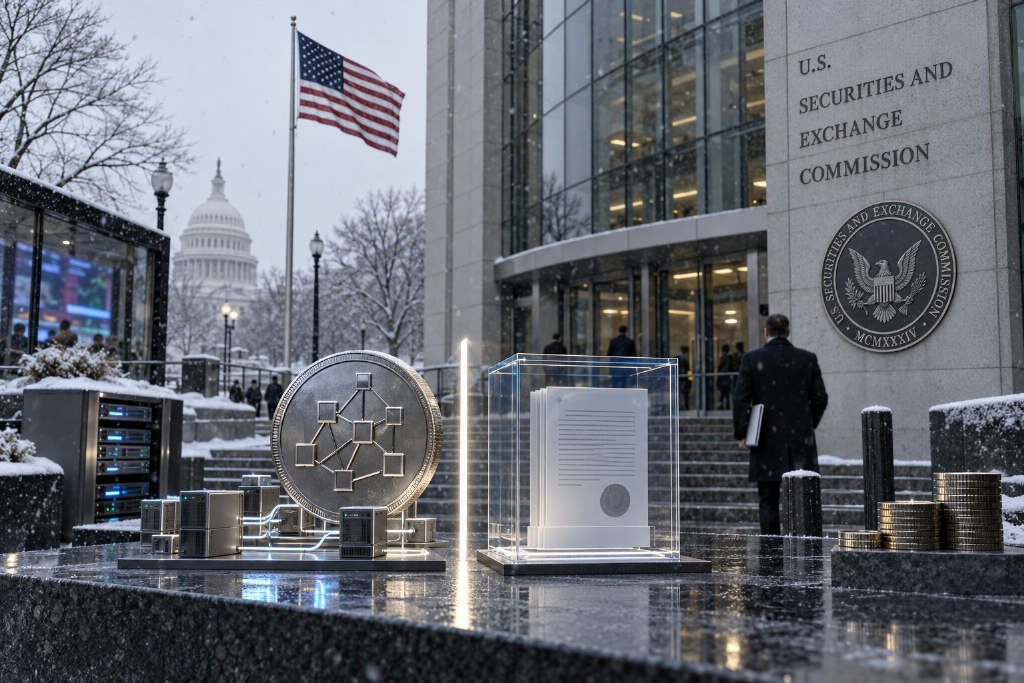
SEC2026-10-01 01:47:09SEC FAQ lays out nine answers on crypto assets, functional networks and investment contractsThe U.S. Securities and Exchange Commission’s Division of Corporation Finance has issued a new FAQ on how federal securities laws apply to certain crypto assets and related transactions, offering a more detailed view of where the agency sees the line between non-security crypto assets and investment contracts. The document does not carry legal force and is not a formal SEC rule or statement, but it addresses several questions that have remained central to the industry. The FAQ covers how to think about functional and decentralized networks, the classification of staking receipt tokens, the meaning of receipts, when marketing statements may amount to promises of essential managerial efforts, and whether post-functionalization maintenance, upgrades, and network-effect activities still matter under the Howey framework. It also addresses whether a new investment contract can arise in a functional system, how buyback programs should be viewed, and when a secondary-market trading platform could be treated as a promoter. A key thread runs through the entire release: once a crypto system is functional and no longer subject to centralized control, certain ongoing activities by issuers or other participants may no longer count as the kind of essential managerial efforts that support an investment contract analysis. The FAQ also cites Regulation Crypto Assets, Release No. 33-11434, dated Aug. 18, 2026, and the Federal Register citation 91 FR 54510, 54525 dated Aug. 21, 2026.70
SEC2026-09-30 06:46:43SEC staff FAQ on crypto draws lines around buybacks, staking receipt tokens and post-launch network workThe U.S. Securities and Exchange Commission’s Division of Corporation Finance released a crypto asset FAQ on Sept. 25 that applies the agency’s March framework to several contested scenarios: token buybacks, staking receipt tokens, post-launch development on functional networks, and whether secondary trading platforms can be treated as promoters. The document says the answers reflect staff views only, not formal SEC rules, regulations, or Commission statements, and that the guidance carries no legal force. Still, the FAQ gives the market a clearer picture of what staff will examine when deciding whether an investment contract relationship still exists. The main dividing line is whether a network is already functional. In that setting, a buyback announcement for a non-security crypto asset does not amount to a promise of essential managerial efforts, according to the staff. If the network is not yet functional and the issuer frames the buyback as a way to generate returns for token holders, the analysis can shift. The FAQ also sets a narrow definition for staking receipt tokens, says maintenance and upgrades on a functional network do not fall on the managerial-efforts side of Howey, and states that secondary-market platforms are not promoters unless they meet the existing Rule 405 definition. The result is a framework that puts unusual weight on timing, facts, and issuer language.290
Ministry of S2026-09-28 01:29:17China’s Ministry of State Security says crypto anonymity is a “false proposition” as blockchain records enable tracingChina’s Ministry of State Security said on Sept. 28 that claims of “anonymous” and “untraceable” cryptocurrency transactions are being used by bad actors as a marketing hook, while the underlying technology tells a different story. In an article published on its official WeChat account under the title “Crypto crime can’t be traced? Think again!”, the ministry said blockchain networks are inherently transparent and preserve tamper-resistant on-chain records, giving investigators a basis for full-chain tracing. The ministry argued that the apparent anonymity of wallet addresses only creates a temporary separation between an address and a user’s real identity, rather than true concealment. It added that conversions between cryptocurrencies and fiat currencies, as well as swaps between virtual assets, typically pass through trading platforms and payment interfaces, where device identifiers and IP addresses can leave traces. The article also warned about custody risks tied to private keys, saying users face permanent loss of control if a self-held key is lost, leaked, or stolen, while platform custody introduces the risk of exchange failure or loss of contact.250
Ansem2026-09-26 09:18:25Ansem says airdrops remain a key driver of on-chain trading activityCrypto trader Ansem said airdrops still rank among the strongest catalysts for bringing users and trading activity back on-chain. In his view, the last market cycle saw trading terminals capture significant volume, yet many of those platforms still have not offered rewards to users. As competition for traders heats up, he said rewarding early users can work as an effective way to build loyalty and retain liquidity. Drawing on past market experience, Ansem added that well-timed airdrops have previously unlocked substantial on-chain activity, and he expects the same playbook to show up again in the current cycle. The comments point to user incentives as a continuing tool for platforms trying to win and keep active traders.260
SEC2026-09-22 10:31:26SEC says first tokenized U.S. stock trading platform applications could arrive in Q4A U.S. Securities and Exchange Commission official said the first companies seeking to operate tokenized U.S. stock trading platforms could submit applications as soon as the next quarter, following the agency’s conditional exemptive order issued last week. The update was reported by BlockBeats on Sept. 22. The remark links the possible application timeline directly to the SEC’s recent order, which set the regulatory backdrop for firms preparing to enter the tokenized equities market. No company names or further application details were disclosed in the source.460
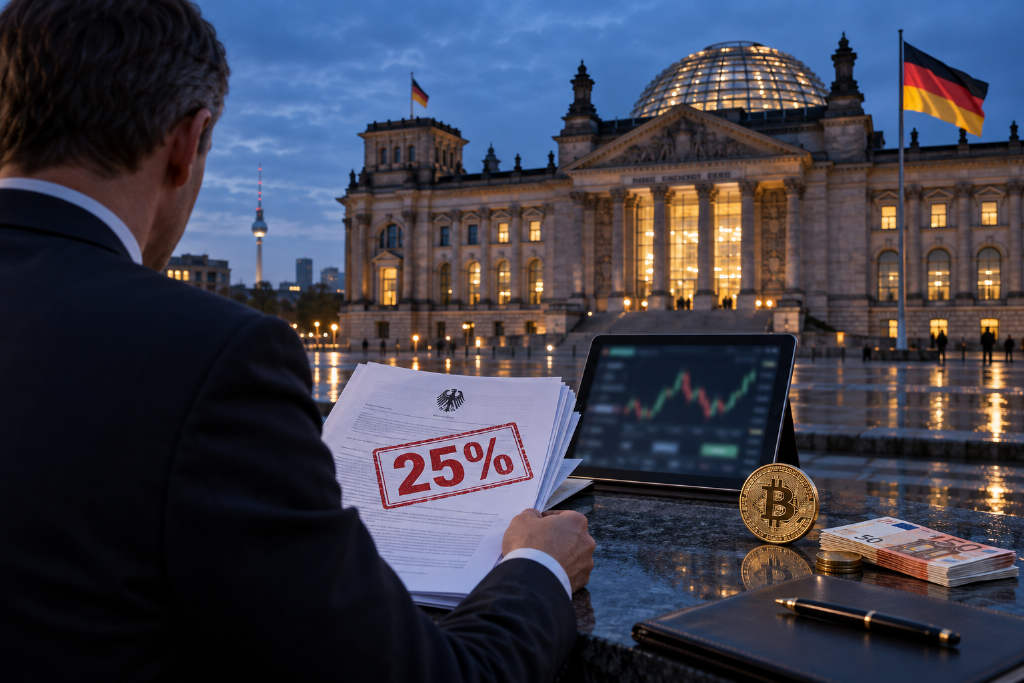
Germany2026-09-10 12:00:26Germany said to plan a 25% flat tax on Bitcoin bought after 2026, with platform withholding from 2028Germany’s finance ministry, led by Klingbeil, is said to be considering a change to how Bitcoin gains are taxed. According to a post from Bitcoin News on X, Bitcoin purchased after Dec. 31, 2026 would face a flat 25% capital gains tax. After adding the solidarity surcharge, the effective rate would reach 26.375%. The proposal also says trading platforms would begin withholding and remitting the tax starting in 2028. The reported plan includes a stricter treatment for transfers between platforms. If a holder cannot provide proof of cost basis after moving Bitcoin to another platform, the 25% rate could be applied to the entire sale amount rather than only the profit. Bitcoin acquired before the cutoff date would keep the current one-year holding exemption. Under the rules now in place in Germany, individuals who sell Bitcoin after holding it for 12 months do not pay tax.810
DWF Ventures2026-08-28 13:23:27DWF Ventures says social trading is gaining ground as platform competition shifts beyond executionDWF Ventures said in a report released on Aug. 28 that social trading is becoming a new battleground for financial trading platforms as trading fees continue to move closer to zero. The report traces the model’s development from early broker copy-trading products to investor communities such as Reddit and Stocktwits, and then to newer platforms that combine verified positions, trading signals, and social graphs. According to the report, as trade execution becomes increasingly commoditized, future platform advantages may come less from the transaction itself and more from network effects, access to well-known traders, and control over exclusive information and distribution. DWF Ventures said leading platforms are building a growth flywheel in which star traders attract followers, public trades build reputation, and follower activity amplifies both trader influence and user growth. The report also flags structural risks. It cites data from Fomo showing that of about 292,000 wallets analyzed over the past three months, only 6.16% were profitable based on realized gains. DWF Ventures added that herd behavior, conflicts of interest between traders and followers, and undisclosed positions held through other wallets remain key challenges for the sector.820
FOMO2026-08-12 13:22:00Why FOMO Has Become a Market Talking Point: A Case for On-Chain Distribution, Social Graphs and Trading EfficiencyA PANews market analysis argues that the appeal of FOMO lies less in product complexity and more in how much of the trading journey it keeps inside one system. The article says the platform has raised $94 million at a $550 million valuation, reached 650,000 accounts in one year, and continued to post record daily revenue. It also cites co-founder seyong as saying that one in every two active wallets on Robinhood Chain comes from FOMO, counting all active wallets rather than only trading wallets. According to the piece, FOMO combines asset discovery, recommendation, trading decisions, execution and post-trade sharing in a single on-chain flow. Users can register, get a dedicated address, link X, fund the account, and trade while publishing theses and visible positions through a live feed. The article argues that this structure can turn positions into a form of credibility and make on-chain activity a distribution network for market ideas. The author also frames FOMO as more than a trading app, calling it a network for cognition, consensus and social identity. At the same time, the piece warns that the model still faces obvious risks, including performative trading, crowd-following, being exit liquidity for others, and the downside of radical transparency.1870